
 (0)
(0)

 Request a Catalog


You will notice on our Picture Frame Finishes page that most of the finishes show images for Face Grain and Edge Grain.
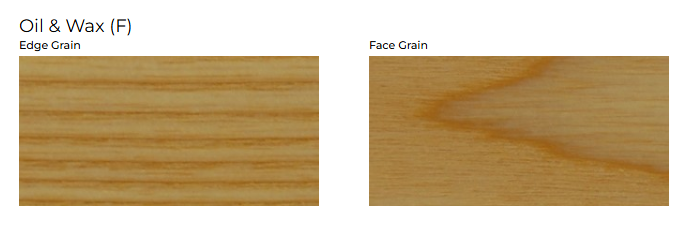
We do apologize for any possible confusion, as it’s not a simple matter. We are trying to give you as much information as we can, to help you understand what you are getting.
The reason for these descriptions comes from the lumber, not the profile. By far the most common way of sawing lumber is what is generally called Plain Sawn or Flat Sawn. This maximizes the yield of clear boards from the log and results in the Face of the board having a cathedral or landscape type grain pattern. This is the type of material we use for 99% of our profiles.
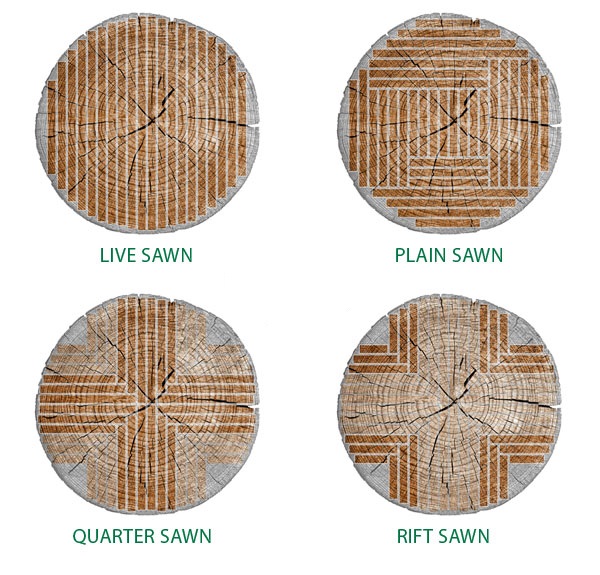
Now think about our profiles – most of them are relatively narrow caps and float frames. You could probably imagine that to make a 2″ or 3″ tall profile where the face of the profile had the face of a plain sawn board would take a really thick board! Theoretically, it’s the same volume of material, so you may think “no big deal”. However, to make a board that will yield a clean, clear 2 or 3″ thick board takes a very special (read: expensive) log, and takes exponentially longer to dry it.
The bottom line is: with rare exceptions, we use the thinnest board possible to make the required profile. So to make a 3/4″ x 2″ cap, we use a 4/4 (1″ rough) board, rip it to 2″ (actually more), and then it will be turned 90° in use. Meaning that the Face of the Board becomes the Side of the moulding, and the Face of the Moulding is showing what was the Edge of the Board.
The most confusing part is that there is no 100% guarantee of what a moulding will look like. Trees do not grow like pencils, where there is no variation from top to bottom, where every board taken from the same place in the log will look exactly the same. Additionally, even if that were the case, now we are taking blanks of moulding from various places in the board which also changes the look. Here is an example of how different the same profile could look if taken from various places in the log. And remember, this is only one section of the log – 1 foot, 2 feet, 10 feet away it will be different.
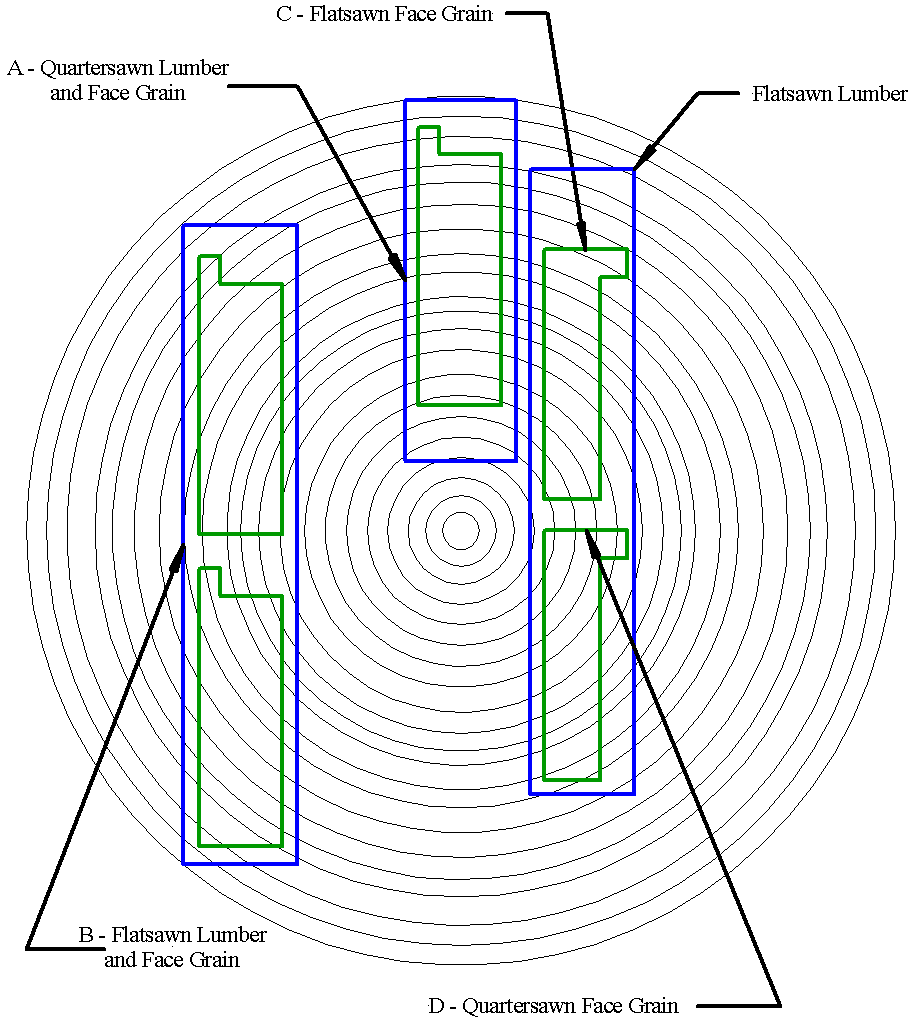
An exception is the White Oak 3-series profiles which have a wider face and are made from Quartersawn lumber. While the Face of the Moulding in this case IS actually the Face of the Board, we still call it Edge Grain because it’s what the edge of a “normal” (flat sawn) board would look like.
And even though we referred to the link earlier in this post, please take a look at the Quartersawn vs Riftsawn page when ordering caps and floaters in White Oak, because even though we are using Plain Sawn lumber, the look can vary quite a lot – a single example of the Edge Grain of White Oak:
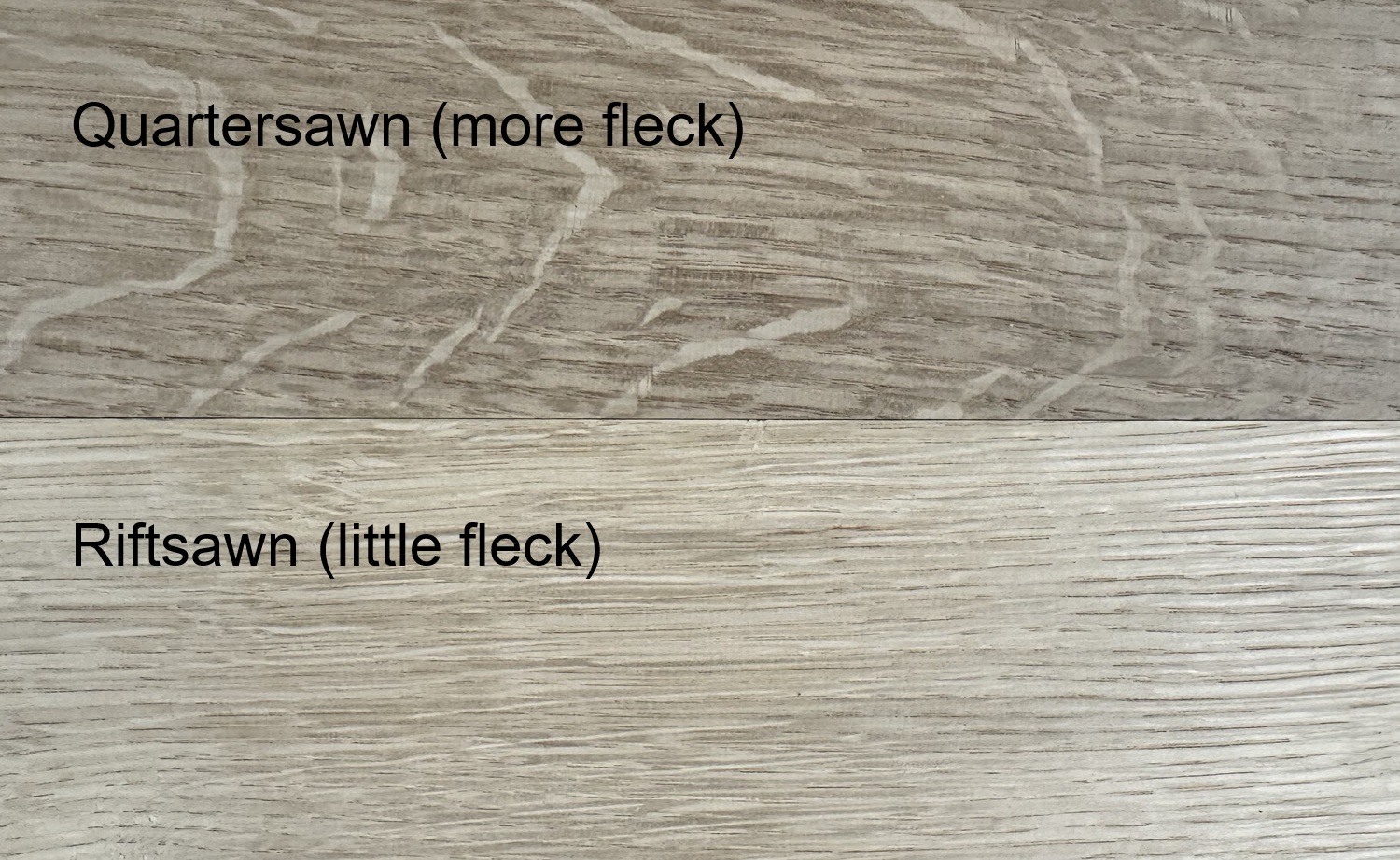
Quartered vs Rift 1 SYou can see visual representations of typical Face Grain or Edge Grain on this page.